The landscape of **US fashion retail** is shifting faster than most analysts predicted. From legacy department stores rethinking their footprint to direct-to-consumer brands pivoting to wholesale, the **US fashion retail updates** coming out of the first half of 2025 reveal a market that is simultaneously contracting and expanding. Here’s what you need to know — and why it matters for brands, creators, and shoppers alike.
Brand Moves: Legacy Names Retrench, New Names Expand
Macy’s announced plans to close roughly 150 underperforming stores by 2027, funneling investment into its “small-format” locations and digital experience. Meanwhile, off-price retailer TJX continues to open new Marshalls and HomeGoods locations, betting that value-seeking consumers will sustain foot traffic. On the higher end, Nordstrom’s off-price arm, Nordstrom Rack, is testing smaller urban formats. These moves signal a clear bifurcation: brands are either shrinking physical footprint to focus on profitability or expanding into value-focused real estate.
At the same time, digitally native brands like True Classic, Figs, and Lunya are increasing their wholesale presence. True Classic recently entered Kohl’s and Target, while Lunya launched sleepwear sections at Nordstrom. The pure-DTC strategy is losing steam as customer acquisition costs rise, and these **US fashion retail updates** show that even successful online brands need a physical — or at least a wholesale — touchpoint to reach new demographics.
Retail Shift: The Rise of the “Store as Experience”
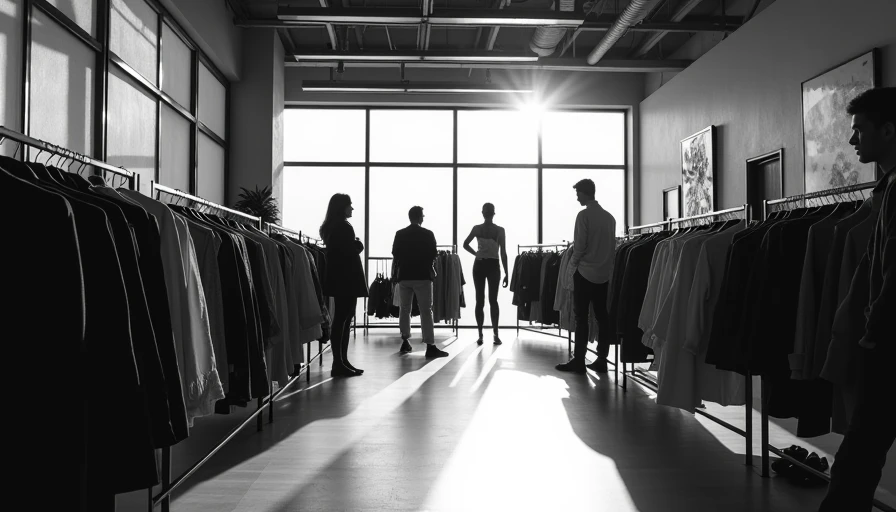
Physical retail is not dead, but it’s becoming something else. Brands are shrinking square footage but investing heavily in flagship experiences. Nike’s “House of Innovation” in New York and the new Gucci Osteria in Los Angeles are examples of retail-as-destination. But this isn’t limited to luxury. American Eagle’s newest concept stores include a coffee bar and a denim customization station. According to leasing brokers, landlords are now prioritizing tenants that offer “experience” over pure sales volume.
Another key **US fashion retail update** is the growth of pop-up concepts. Leases as short as two weeks are becoming common in major cities, allowing brands to test demand without long-term commitment. Companies like Apparel Group and BNKR have built entire business models around rotating pop-ups. For smaller designers, this is a low-risk entry into physical retail — and a way to generate press and social media buzz simultaneously.
Trend Cycle: Quiet Luxury Peaks, Indie Sleaze Returns?
Trend cycles are accelerating. “Quiet luxury” — the minimalist, logo-free aesthetic pushed by brands like The Row and Loro Piana — has peaked according to trend forecasting agencies, with search volume for “stealth wealth” declining since early 2025. What’s rising? A cluttered, maximalist mood sometimes called “indie sleaze 2.0” on TikTok. Thrifted band tees, chunky sneakers, and layering of multiple brands are gaining traction, especially among Gen Z and young Millennials.
From a retail perspective, this means that retailers who stocked heavy on neutral cashmere will need to pivot toward more eclectic inventory. Zara and H&M are already adapting their buying, with Zara’s latest collection featuring bold prints and distressed denim. The **US fashion retail updates** around trend cycles remind retailers that agility in merchandising is no longer optional — it’s survival.
Creator Commerce: TikTok Shop Rewrites the Rules
Perhaps the most disruptive **US fashion retail update** is the normalization of TikTok Shop for apparel sales. Brands that were hesitant early on are now seeing significant revenue from livestream commerce. According to industry reports, TikTok Shop accounted for roughly 3% of total US apparel sales in Q1 2025, up from less than 1% a year ago. Small brands are especially benefiting: a creator with 50,000 followers can move hundreds of units during a two-hour livestream, often with minimal ad spend.
This shift is forcing retailers to rethink their influencer strategies. Commission-based affiliate programs are giving way to “creator partnerships” where influencers have input on product design and inventory. Revolve and Fashion Nova have been leaders here, but mainstream retailers like Target are launching their own TikTok Shop collaborations. For fashion industry professionals, investing in creator relationships is no longer a side project — it’s a core channel.
Price & Demand: Value and Premium Both Thrive, But Mid-Tier Squeezed
The “hourglass” retail thesis is stronger than ever. Consumers are either trading up for premium pieces (investment outerwear, quality denim) or trading down to discount retailers (Walmart, Target’s private brands, Amazon essentials). The squeezed middle — brands like Gap, J.Crew, and Banana Republic — are fighting to stay relevant. Gap’s turnaround efforts, including a new denim line and better fits, show some promise, but traffic data remains mixed.
Another **US fashion retail update** in pricing: dynamic pricing is coming to apparel. While airlines and Uber have used surge pricing for years, fashion retailers are experimenting with real-time price changes based on inventory levels and demand. Everlane and Uniqlo have tested it on select basics, and more are expected to follow. For shoppers, this means that waiting too long to buy might cost more — or less. For brands, it’s a tool to protect margins without blanket markdowns.
What to Watch Next
The second half of 2025 will bring more clarity on tariffs, consumer spending, and the pace of store closures. For now, the **US fashion retail updates** point to a market that rewards agility, direct-to-creator relationships, and a willingness to test new formats. Whether you’re a brand manager, a creator, or a retail operator, the key takeaway is simple: the rules of fashion retail are being rewritten — and the early adopters are already winning.