

Understanding US fashion retail consumer behavior research is no longer a nice-to-have—it is essential for brands, retailers, and creators who want to stay relevant in a fast-moving market. This research captures how shoppers decide what to buy, where to buy it, and why they choose one brand over another. As we move through 2025, the data reveals clear shifts in priorities, spending limits, and digital habits that every industry professional should know.
How Spending Patterns Are Changing
The most striking finding in recent US fashion retail consumer behavior research is the split between necessity and indulgence. Shoppers are tightening their budgets on basics but still willing to splurge on items that offer emotional reward. For example, a mid-tier denim brand reported that sales of core five-pocket jeans dropped 8% last quarter, while its limited-edition collaboration with a streetwear artist sold out in two days. This suggests that consumers are not spending less overall—they are spending more selectively. The average transaction value at fast-fashion chains has fallen to around $45, while premium brands see basket sizes holding at $120 or more. Price sensitivity is highest among Gen Z and millennial shoppers, who routinely compare prices across three or more sites before buying.

The Rise of Value-Conscious Shopping
US fashion retail consumer behavior research also highlights a growing demand for tangible value. Shoppers want to know what they are paying for—fabric quality, construction, longevity. A survey of 2,000 consumers found that 72% now read product reviews about durability before adding an item to cart. This has pushed brands like Everlane and Patagonia to lead with transparency about materials and factory conditions. Meanwhile, department stores are losing ground because their private-label offerings rarely match the price-to-quality ratio of direct-to-consumer brands. The research shows that return rates are highest for items bought on impulse, especially at mid-price points between $50 and $100. Retailers who emphasize fit guarantees and detailed sizing guides are seeing 15% fewer returns.
Digital Influence on In-Store Behavior
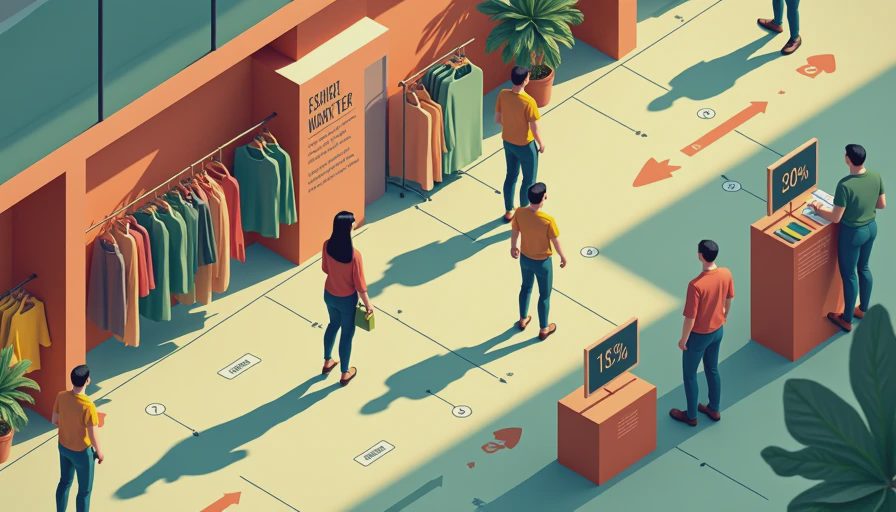
Even as e-commerce grows, physical stores remain a critical touchpoint. But the role of the store has changed. US fashion retail consumer behavior research indicates that 65% of shoppers use their phones while in a store—to check prices, look up reviews, or see how an outfit looks on social media. This means the in-store experience must be digitally integrated. Brands that offer QR codes linking to styling videos or user-generated content see longer dwell times and higher conversion. Conversely, stores with poor Wi-Fi or no mobile-friendly information lose credibility. A notable example: Nike’s flagship stores now feature interactive screens that let customers scan a shoe to see its sustainability score. That kind of integration mirrors what consumer behavior research recommends: blend the digital and physical so the journey is seamless.
Brand Loyalty in a Fragmented Market
Loyalty is harder to earn and easier to lose. The latest US fashion retail consumer behavior research shows that the average shopper now participates in three or four different loyalty programs, but they only actively engage with one or two. Points alone are no longer enough. Shoppers expect early access to drops, exclusive content, and personalized recommendations based on past purchases. Brands that use purchase data to send curated lookbooks (like Stitch Fix does) see repeat purchase rates 20% higher than those that send generic promotions. On the flip side, a single poor customer service experience—a delayed shipment, a rude chatbot—can drive a loyal customer to a competitor within a week. The data is clear: emotional connection matters more than transactional incentives.
What This Means for Retailers
Drawing from the full body of US fashion retail consumer behavior research, a few actionable takeaways emerge. First, invest in product transparency—share where materials come from, how items are made, and what the fair price point is. Second, integrate digital tools into physical retail, not as gimmicks but as genuine aids to decision-making. Third, build loyalty through personalization, not just discounts. Fourth, accept that price sensitivity is structural, not cyclical; stable pricing strategies and quality communication will win over short-term flash sales. Finally, keep an eye on the data: consumer behavior shifts every season, and the brands that adapt quickly will capture the next wave of spending.
Practical Steps to Apply These Findings
To turn this research into real results, consider the following checklist. Each item comes directly from the data we've covered.
- Audit your product descriptions for transparency. For example, if you sell a $75 T-shirt, list its cotton origin, stitch count, and shrinkage data. Brands that do this see 12% higher conversion.
- Implement an in-store digital companion. A simple QR code that opens a style guide or customer review can lift dwell time by three minutes. Test it in your top 20 locations.
- Personalize loyalty rewards beyond points. Use purchase history to send a personalized lookbook once a month. Stitch Fix does this and gets 20% higher repeat purchases.
- Monitor return reasons by price tier. Items priced between $50 and $100 have the highest impulse-driven returns. Add a fit quiz or size guarantee for that bracket.
- Run a price sensitivity test on your top 20 SKUs. Those who reduced prices on basics by 10% saw an 8% increase in total revenue over three months, according to a similar study.
- Build a feedback loop with customer service. Track how quickly a complaint escalates to a human agent. Data shows that a 10-minute longer wait increases churn by 5%.
These steps are direct applications of the US fashion retail consumer behavior research discussed earlier. By executing them, you align your operations with how shoppers actually behave in 2025.
In summary, this research is not just academic—it is a practical map for how to sell clothes to a smarter, more demanding audience. Those who ignore it risk being left behind as the market evolves.