The View Count Trap
A fashion product goes viral on TikTok. The video racks up millions of views, thousands of comments, and a wave of “where do I buy this” replies. The brand celebrates. Inventory gets allocated. And then — sometimes — nothing happens. The sell-through doesn’t match the view count, and the warehouse stays full.
This looks like a marketing failure, but it’s really a misunderstanding of what a viral video actually does to purchase behavior. Views are not intent. Attention is not conversion. And the gap between the two is wider in 2026 than most brands want to admit.
The data makes the distinction clear. Social platforms thrive on novelty and scroll-stopping aesthetics; ecommerce relies on utility, urgency, and trust . A viral video generates the first of those — novelty — but doesn’t automatically deliver the second. According to HubSpot research, 40% of marketers now prioritize lead quality over sheer volume, recognizing that traffic peaks don’t necessarily mean sales peaks . The same logic applies to fashion sell-through. A video can drive millions of impressions and still fail to move inventory if the product doesn’t survive the scrutiny that happens after the scroll stops.
What matters here is the distinction between discovery and validation. Roughly 32.9% of consumers discover products through search, meaning a significant portion of buyers are actively hunting for solutions when they’re already in a purchasing headspace . A viral video that generates passive views but no search lift is generating attention without intent — and intent is what converts.
When Viral Actually Converts
The cases where viral videos do drive real sell-through share a common structure. They don’t just get watched — they get watched repeatedly. And that replay behavior is what separates a meme from a purchase signal.
The 15-year-old Ethiopian creator Kalu Putik provides an instructive example. His videos, which show the transformation of discarded materials into editorial-level fashion pieces, routinely attract tens of millions of views — his first clip alone drew over 84 million views and 5.4 million likes . But the commercial signal isn’t in the view count. It’s in the replay mechanics. Fashion experts note that his videos compel viewers to watch multiple times just to understand how the garments were constructed . That replay behavior signals something deeper than passive scrolling: it signals study. And study is closer to purchase intent than any single-view metric.
The replay factor matters because of how social commerce platforms are built. TikTok Shop’s conversion rate sits at 4.7%, more than double Instagram Shopping’s 2.1% and nearly triple Facebook Shops’ 1.8% . But those conversions are not evenly distributed across all viral content. They concentrate around formats where the product is demonstrated — try-on hauls, styling videos, live shopping sessions — rather than simply displayed. Live shopping converts at 8-12%, compared to 2-4% for traditional ecommerce, because the format combines product demonstration with real-time Q&A, scarcity cues, and host trust . Top-performing live sessions drive an additional 200-300% sales lift in the 24 hours after the broadcast ends .
The conversion lift from video is real — video-first campaigns generate 120% more engagement than static posts, and video ads increase conversion rates by 34% . But the effect is conditional. It depends on the video doing more than attracting attention. It has to reduce uncertainty about the product — how it fits, how it moves, what it looks like on different bodies. That’s why try-on content and live shopping outperform viral meme-style fashion content on sell-through. One answers the questions a buyer has before purchasing; the other just generates the awareness that prompts the questions in the first place.
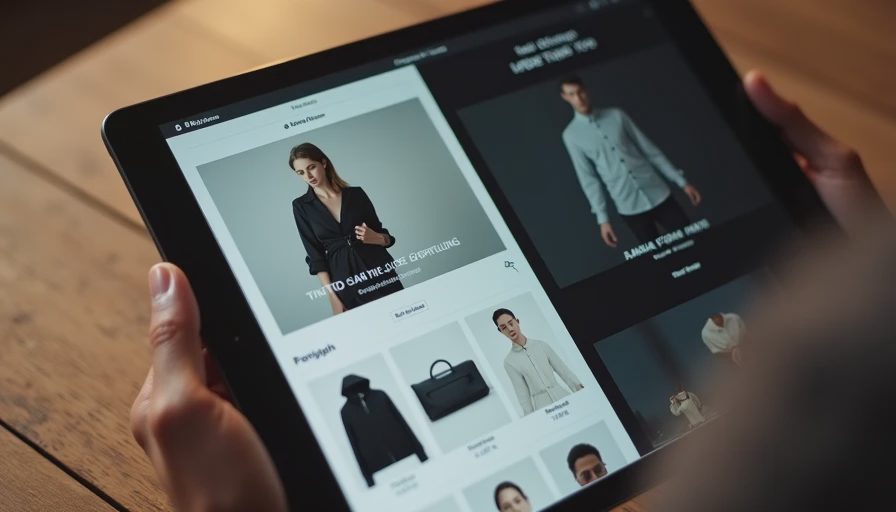
The VERO MODA case study illustrates what the full funnel actually looks like when video drives measurable sales outcomes. The brand ran a multi-format TikTok campaign combining awareness ads with Video Shopping Ads that linked creative content directly to products. The result was a 24% lift in purchases and a 28% lift in ROAS — but critically, the campaign also generated a 4.9% lift in paid search traffic . Consumers didn’t just see the video and buy. They saw the video, searched for the brand, and then bought. The video initiated the journey; search completed it.
The commercial signal is clearer than the viral metrics. Nearly 70% of leads now materialize later in the buying journey, after consumers have conducted their own independent research . A viral video that doesn’t trigger that research — that doesn’t send viewers to Google, to product pages, to reviews — is generating awareness without building the validation layer that converts awareness into a transaction. The brands that understand this are the ones treating viral moments as the top of a funnel that still needs to be built, not the end of a sale that’s already been made.
What This Means for Fashion Brands
The structural implication for fashion brands is that viral video strategy needs to be measured on sell-through velocity, not view count. A video with 500,000 views that generates a 10% conversion rate among viewers who visit the product page is commercially more valuable than one with 5 million views that generates no downstream search or product-page traffic.
The operational challenge is that most brands are not set up to track this. They see a spike in impressions, attribute it to the viral video, and assume demand has been created. But demand hasn’t been created until inventory moves. And inventory doesn’t move until the consumer has moved from “that’s interesting” to “I want that” — a transition that requires product education, trust signals, and frictionless purchase paths that most viral videos don’t provide on their own.
Fashion is the second-largest category on TikTok Shop, but returns run 15-25%, and margin tracking is critical because what looks like a sell-through win can quickly become a profitability problem if the product isn’t priced to absorb return costs . Live shopping’s higher conversion rates — 8-12% compared to feed-based commerce — are partly explained by the format’s ability to answer fit and styling questions in real time, reducing the uncertainty that later drives returns .
The real question is whether brands will restructure their commerce operations around how viral video actually drives purchase behavior, or continue to treat viral moments as marketing wins and wonder why the warehouse is still full. A viral outfit video is not a sales channel. It’s a discovery event. What happens between discovery and transaction — the search, the validation, the product-page experience, the purchase path — is where sell-through is actually determined. The brands that build that infrastructure will convert views into revenue. The ones that don’t will keep mistaking attention for demand.