
The Bankruptcy Headlines Miss the Real Story
When Saks Global filed for Chapter 11 bankruptcy protection in January 2026, the obituaries for the American department store wrote themselves. Another legacy name, another round of store closures, another data point for the retail-apocalypse narrative that has been running for a decade. But the Saks bankruptcy is not proof that department stores are dying. It is proof that the ones failing to edit are being edited out — and the ones doing the hard work of curation, experience design, and channel integration are quietly posting their strongest numbers in years.
This looks like a decline story. It's really a sorting story.
The evidence is hiding in plain sight. Macy's posted a 3.2% comparable sales increase in its most recent quarter — its strongest performance in 13 quarters — while its luxury banner Bloomingdale's delivered its best results in over three years. Nordstrom hit a record $15.9 billion in sales in 2025, finally surpassing its 2019 high-water mark, with profits before income and taxes at their highest in more than a decade. These are not the numbers of a sector in terminal decline. They are the numbers of a sector bifurcating between the operators who understand what a department store needs to be in 2026 and those who are still running the 1990s playbook.
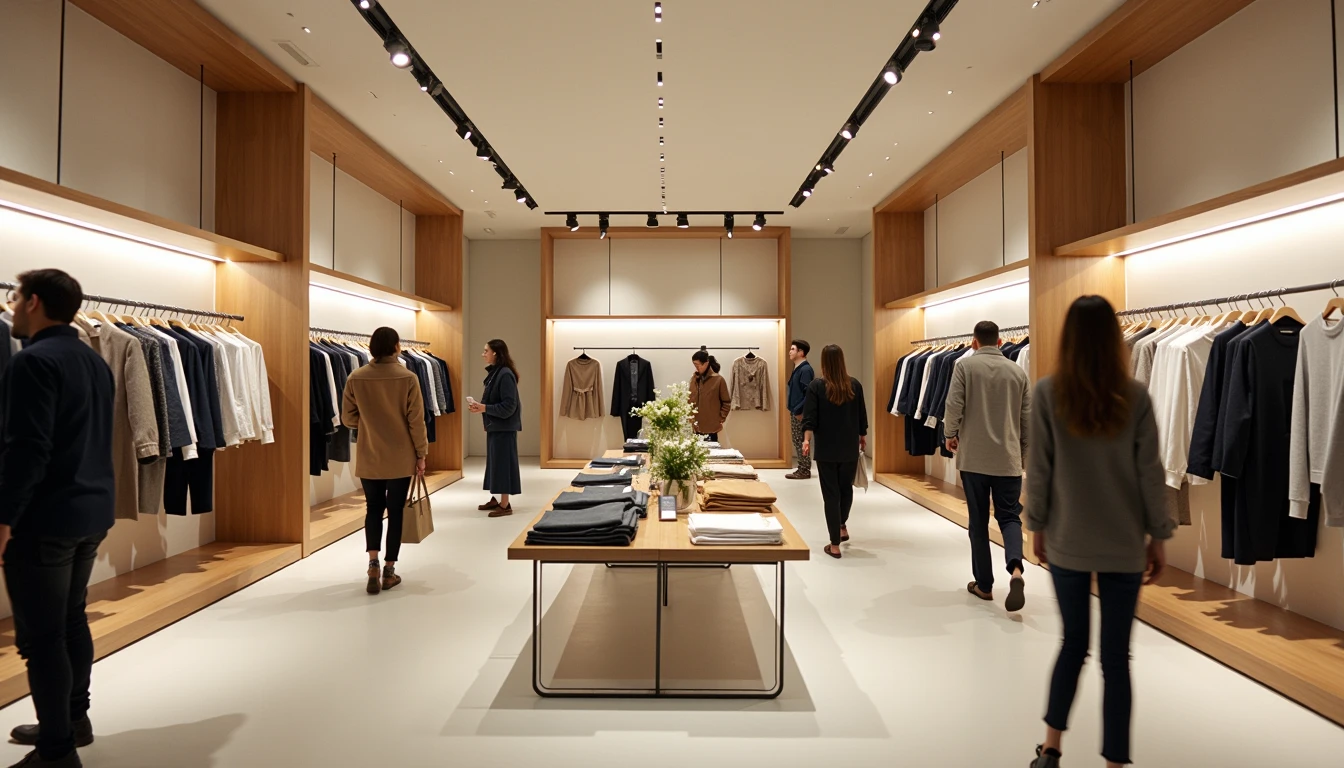
The retail signal is clearer than the marketing. The department store is not disappearing. It is being reimagined. And the reimagining has a distinct shape: smaller footprints, sharper curation, deeper experiences, and a willingness to stop trying to be everything to everyone.
The Edit Is the Strategy
What distinguishes the department stores gaining ground from those losing it is not inventory volume or promotional aggression. It is editorial conviction — the willingness to make deliberate choices about what belongs on the floor and what doesn't.
Bloomingdale's chief merchant Denise Magid frames the shift directly: "The future of the department store is centered on curation, experience, and human expertise, not simply scale or endless assortment". The 59th Street flagship is being rebuilt floor by floor, with 56 new designers introduced this year and a two-level Chanel boutique under construction. The message is unambiguous: this is not a place to find everything. It is a place to find the right things.
Nordstrom's strategy reinforces the same logic from a different angle. The retailer has expanded its Nordstrom Local concept — smaller, neighborhood-level service hubs offering tailoring, buy online pick up in-store, and returns — while simultaneously investing in flagship experiences that treat the store as a destination rather than a utility. The Manhattan flagship now houses a rotating two-level brand showcase called "The Gift Shop at The Corner," an expanded jewelry hall anchored by West Village fine jewelry destination Muse, and a beauty section redesigned to borrow the self-service, discovery-driven model pioneered by Sephora. Pete Nordstrom, the company's co-CEO, describes the approach plainly: "We thought, 'Let's create more authority'".
What matters here is the word "authority." A department store that carries everything has breadth but no point of view. A department store that curates has something to say — and that something is what gives customers a reason to visit in person rather than open Amazon.
The consumer behavior data supports the edit. NYU luxury marketing professor Thomaï Serdari notes that the traditional value proposition — "volume, novelty, and variety in one place" — is no longer unique. When every product category is available online with free shipping, the department store's advantage cannot be selection. It has to be something else: the experience of discovery, the authority of a well-edited assortment, the human expertise of a sales associate who knows the product, the tactile encounter with a garment that cannot be replicated on a screen.
The stores getting this right are investing accordingly. Macy's "Reimagine 125" locations — the 125 stores receiving targeted upgrades in merchandising, store presentation, and omnichannel integration — are outperforming the rest of the fleet. The company is simultaneously closing 150 underperforming locations, a contraction that looks like retreat but functions as editing: cutting the stores that cannot deliver the experience while doubling down on the ones that can.
The Risk of Not Editing
The Saks bankruptcy provides the counterexample. Analysts pointed to strained vendor relationships, inconsistent customer service, and a business model that had not evolved beyond the department store template that stopped working years ago. As retail consultant Gabriella Santaniello notes, the bankruptcy is likely to create further pressure in the space because Saks will be forced to discount — which in turn trains the customer to expect discounts, which in turn erodes margin across the entire sector.
That is the structural risk for every department store still operating the old model. When the customer's primary reason for visiting is a sale, the store is not a destination. It is a clearance channel. And clearance channels do not build loyalty — they build price sensitivity.
The consumer psychology reinforces the point. Content creator Hannah Truly Elisha, who focuses on retail history, observes that mid-century department stores thrived because they offered experiences — fashion shows, clubs, live music — that gave customers reasons to spend hours in the building. "The experience, I believe, is the most important part, and something department stores have slowly erased," Elisha says. "They are not giving me a reason to choose them over Amazon".
The stores that are winning in 2026 have rebuilt that reason. Nordstrom's partnership with aesthetics clinic SkinSpirit brings medspa services into select stores. Bloomingdale's is layering "immersive campaigns, in-store animation, and personalized clienteling" onto its physical footprint. These are not add-ons. They are the core value proposition — the thing the store offers that a website cannot.
The retail signal is clearer than the bankruptcy headlines. When 73% of retail shoppers engage across multiple channels, and those who use four or more touchpoints spend significantly more than single-channel shoppers, the department store that functions as an integrated hub — fulfillment center, showroom, service point, discovery destination — has a structural advantage over the pure-play e-commerce brand that can only reach the customer through a screen.
What This Signals
The department store sector is not shrinking into irrelevance. It is splitting into two tiers: the editors and the edited.
The editors — Nordstrom, Bloomingdale's, the upgraded Macy's fleet — are making deliberate bets on curation, experience, and service. They are closing locations that cannot deliver the experience and reinvesting in the ones that can. They are treating the store less as a distribution channel and more as a brand statement: a physical expression of who the retailer believes its customer is and what that customer values.
The edited are the stores still operating on the old assumptions — that square footage is leverage, that brand count is a competitive advantage, that the customer will show up because she always has. Saks Global is the most visible example, but it is not the only one. The pressures that pushed Saks into bankruptcy — vendor strain, discount dependency, a customer base trained to wait for sales — are present across the mid-tier department store landscape.
What matters here is that the editors are not winning because they have better real estate or deeper pockets. They are winning because they have made a strategic choice that the edited have not: to be something specific to someone, rather than everything to everyone. In a retail environment where the consumer can find anything with a search query, the department store's survival depends on offering something that cannot be searched for — a point of view, an experience, a human interaction, a feeling of discovery. The stores that edit are the stores that endure. The ones that don't are the ones the market edits out.