
The Floor Is the Message
Nordstrom's decision to overhaul its contemporary floor is not a routine merchandising refresh. It is a structural response to a consumer taste shift that has been building for several years — and the way the retailer is executing the reset reveals more about where U.S. fashion demand is heading than any trend forecast.
The contemporary floor has long been the strategic center of Nordstrom's brand identity. Positioned between luxury designer and accessible mass-market, it is where the retailer makes its most important editorial statement: who it believes the core customer is, what that customer wants to wear, and how much she is willing to pay. In 2026, Nordstrom is signaling that all three have changed.
The overhaul follows a clear strategic logic. After going private in a $6.25 billion deal with the Nordstrom family and Mexican retail giant El Puerto de Liverpool, the retailer has been freed from quarterly earnings pressure to make longer-term bets on store experience and brand mix . The Manhattan flagship shows the playbook in action: a redesigned beauty section that borrows the self-service, discovery-driven model favored by Sephora; an expanded jewelry floor; and a two-level brand showcase space that rotates monthly . The contemporary floor reset extends that thinking to the category that defines Nordstrom's commercial identity.
This looks like a store renovation story. It's really a demand signal. When Nordstrom repositions its contemporary floor, it is making a bet on which brands, aesthetics, and price points will drive the next cycle of customer growth — and which ones have peaked.
What's Coming Off the Floor
The brands being edited out of the contemporary assortment share a common profile: they dominated the 2018–2023 cycle of logo-driven, streetwear-inflected, heavily branded fashion. The aesthetic that once felt urgent — visible logos, statement hoodies, sneakers-as-status — has been losing cultural velocity. In its place, Nordstrom is making room for what the retailer's merchandising team describes as a shift toward "softer, more wearable, less obviously branded" product.
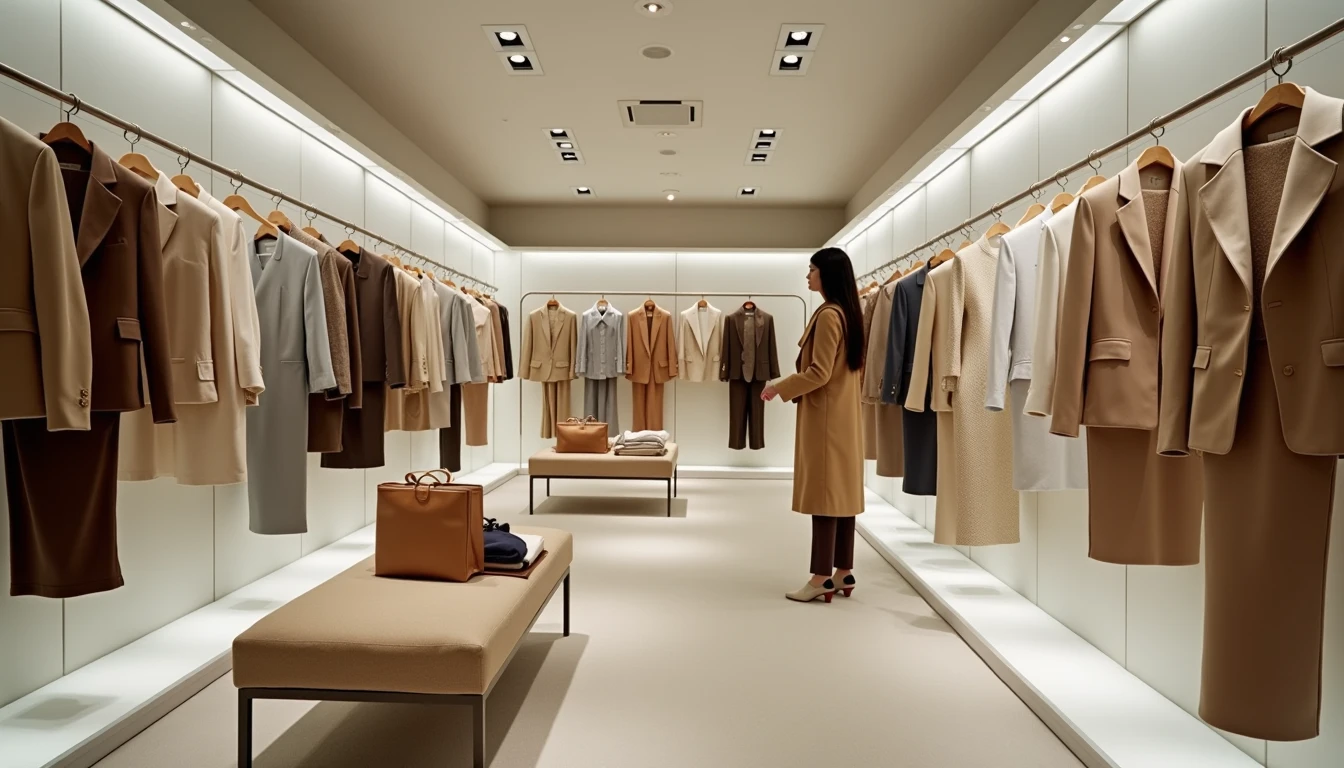
That shift is visible across multiple categories. Tailoring is being rebuilt around unstructured silhouettes and natural fibers — the kind of soft suiting that reads as intentional rather than corporate. Knitwear is moving toward finer gauges and neutral palettes. Denim is pivoting from extreme silhouettes toward shapes that balance distinctiveness with wearability. The common thread is a move away from clothing that announces itself and toward clothing that rewards attention.

The retail signal is clearer than the marketing. Nordstrom's merchandising strategy has long prioritized storytelling, curation, and exclusive partnerships to support brand growth . What's different in 2026 is the story being told. The contemporary floor is no longer organized around hype cycles. It is organized around a customer who wants fashion that works as a wardrobe rather than a series of statements — and who is willing to pay full price for pieces that deliver on fabric, fit, and longevity rather than branding.
The commercial logic is sound. In a market where 66% of consumers rank value for money as their top priority, and where the definition of value increasingly centers on durability and quality rather than discounts, a floor that foregrounds product substance over brand theater is better positioned to command full-price sell-through. Nordstrom is not chasing the customer who wants the newest logo. It is betting on the customer who wants the best sweater — and knows enough to recognize the difference.
Why This Matters Beyond One Retailer
Nordstrom's contemporary reset is not happening in isolation. It reflects a broader shift in how U.S. consumers are allocating their clothing budgets — and that shift has implications for every brand competing in the contemporary space.
The trend away from conspicuous branding and toward product-led purchasing is well documented. Consumers who spent the post-pandemic years building wardrobes around statement pieces are now editing toward coherence. The aesthetic that defined the 2020s — recognizable, photographable, built for social media — is giving way to an aesthetic built around touch, drape, and longevity. Nordstrom's floor reset is simply the physical manifestation of that shift, expressed through merchandising decisions rather than trend reports.
What matters here is the pricing signal. The brands being added to Nordstrom's contemporary floor share a willingness to hold full-price positioning based on product quality rather than brand heat. That is a meaningful shift in a market where discount dependency has become structural across the mid-tier. By curating toward brands that resist markdowns, Nordstrom is aligning its floor with the segment of the market where pricing power is strongest — and signaling to customers that the contemporary floor is a destination for investment pieces, not impulse purchases.
The competitive context sharpens the signal. Nordstrom has seen a 3.3% increase in year-over-year foot traffic while rivals Saks Fifth Avenue and Neiman Marcus have experienced declines of around 6% . The contemporary floor reset is part of the explanation: while Saks and Neiman Marcus compete heavily on ultra-luxury designer fashion, Nordstrom's broader mix of luxury and contemporary brands appeals to a wider, more value-conscious customer base . The reset doubles down on that advantage by making the contemporary floor feel more curated and intentional — a destination for discovery rather than a department to walk through on the way to designer.
The risk is execution. A floor reset that narrows the brand mix in pursuit of coherence risks alienating customers who came to Nordstrom precisely for its breadth. The retailer's answer — visible in the Manhattan flagship — is to expand experiential elements alongside the product edit. The rotating brand showcase, the café, the redesigned beauty experience: these are not add-ons. They are the infrastructure that makes a tighter product assortment feel like a point of view rather than a reduction in choice .
The real question is whether Nordstrom's contemporary reset becomes a template for the broader department store sector — or an exception that proves how difficult genuine merchandising conviction has become. When a retailer edits its floor with this level of intention, it is making a statement about who its customer is and who she is becoming. Nordstrom is betting that the customer of 2026 and beyond wants less noise, better product, and a retail experience that respects her taste. The contemporary floor is where that bet gets tested — one brand decision, one fixture move, and one full-price sale at a time.