The Margin Math Has Changed
U.S. apparel retailers are entering mid-2026 with a profit equation that no longer works the way it did two years ago. Input costs are climbing. Full-price sell-through rates have dropped from the pre-COVID standard of 70–75% closer to 50% at many chains . And consumers, particularly Gen Z and Millennials, are increasingly willing to reach past national brands for a store-owned label — provided the quality and price make sense .
The result: private label is no longer just a margin filler. It's becoming the margin strategy.
Capgemini's Retail Trends 2026 report captures the shift directly, calling this "the year of private label brands." The consultancy found that 44% of shoppers now prefer private label or low-cost brands over name brands, with younger demographics leading the trend . The U.S. private label market is projected to nearly double to $283 billion by 2030, and 80% of consumers now rate store-brand quality as equal to or better than national brands — erasing the quality stigma that once capped private label growth .
What makes this moment different is not just consumer acceptance. It's the cost pressure on the other side of the ledger.
Apparel sourcing costs are under siege from multiple directions. U.S. tariffs are expected to drive short-term price increases of roughly 35% on apparel sourcing and 37% on leather goods . The Iran-U.S.-Israel conflict that escalated in February 2026 has pushed Brent crude above $120 per barrel, directly raising polyester and nylon production costs . Freight rates have surged 55–70% as shipping routes reroute around the Cape of Good Hope, adding roughly 15 days to delivery timelines . For retailers already operating on thin margins, the combined weight of input inflation and discounting pressure leaves limited room to maneuver.
Private label offers one of the few levers retailers still control. As Jack Stratten of Insider Trends notes, "Pricing is really the crucial lever fashion retailers still control. They can't control saturation. They can't get rid of their stores. Supply chains remain challenging. Discovery happens on platforms they don't own. But pricing? Starting prices, markdown strategy, how you position discounts, which channels get what prices. They control all of that" .
Private label is the product expression of that pricing control. When a retailer owns the brand, it owns the margin structure entirely — from sourcing through markdown.
Who's Moving and How
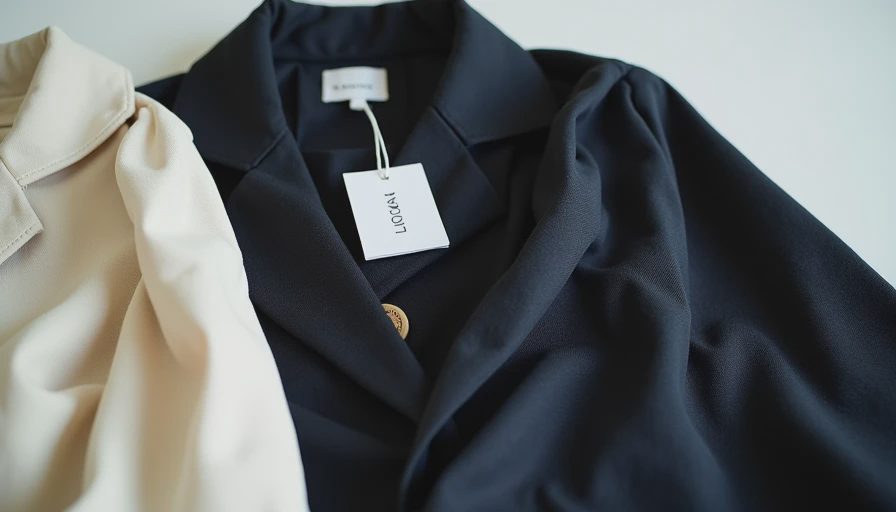
The private label push is not uniform across the sector, but the direction of travel is unmistakable.
At Zumiez, the strategic shift toward private labels has been a measurable contributor to margin expansion. The retailer delivered its second consecutive double-beat in recent quarters, with margin gains driven by higher full-price sales, reduced markdowns, and an increasing private label mix alongside expanded women's apparel . Management raised EPS guidance, and Street consensus projects margin-driven earnings growth through fiscal 2028 . The private label shift is not a seasonal tactic — it's a structural margin lever.
The broader retail landscape confirms the trend. Retailers winning in this environment are leveraging AI-powered supply chains to launch private label products faster, using data to identify demand signals before committing to production . The speed advantage is real: leading retailers are getting products from concept to shelf in a fraction of the time it takes national brands to cycle through wholesale pipelines .
Capgemini's report outlines three ways retailers are capitalizing on the shift: analyzing consumer needs through their own customer data, launching own-brand products and iterating based on real feedback, and positioning private labels as true brand differentiators rather than generic alternatives . The most sophisticated operators are treating private label as a loyalty driver and traffic generator, not just a margin bandage.
The trade-off is complexity. Running a private label program that actually performs requires in-house design capability, supplier relationships across multiple countries, quality control infrastructure, and inventory risk management. Australian department store Myer, which generates roughly 26% of sales from owned or exclusive brands, employs around 20 in-house designers across five private labels and manages over 300 private brand suppliers across 10 countries . That is a different organizational muscle than buying wholesale from national brands.
What This Signals
This looks like a margin story, but it's really a structural shift in how apparel retail works.
When retailers own the brand, they capture the full margin stack — and they control the pricing narrative from start to markdown. In a moment where full-price sell-through is under sustained pressure, that control is worth more than brand cachet borrowed from a third party .
The real question is whether the private label push will stay disciplined around margin or slide into overexpansion. The pattern is familiar: a retailer sees early margin gains, expands the private label assortment aggressively, and eventually dilutes the quality perception that made the program work. Myer's recent experience is instructive — the department store relaunched its entire private label portfolio in 2026 after discovering its brands had "morphed into one," with customers telling them plainly that no young person wants to dress exactly like their parents . Differentiation matters, even within an owned-brand strategy.
The retail signal is clearer than the marketing. When 44% of shoppers say they prefer private label , and sourcing costs are rising 35% or more , leaning harder on owned brands is not a strategic choice — it's a margin imperative. The winners will be the retailers that treat private label as a brand portfolio to be managed, not just a cost line to be optimized.